Credit: Kimball’s Biology Pages
See Also: Biology Dictionary
Grouped by category:
Grouped by category:
Browsing this list may reveal, more easily than searching through the index/glossary, topics you wish to examine.
Animals
- Caenorhabditis elegans: a model organism
- Drosophila melanogaster
- Invertebrates
- Monotremes
- Vertebrates
- Zebrafish
Behavior
- Innate Behavior
- Circadian Rhythms in Drosophila and Mammals
- Honeybee Navigation
- Learned Behavior
- Magnetoreceptors
- Avoiding Predation
- Pheromones
- Taxes
Biochemistry
- ATP
- Bioluminescence
- Cellular respiration: [general] [energy relationships]
- Chemiosmosis – demonstration
- Enzymes
- Enzyme Kinetics
- G proteins
- Gel blotting
- Glycolysis
- Metabolism (with links to specific examples)
- Intermediary metabolism
- Photorespiration and C4 plants
- Photosynthesis: Pathway of Carbon Fixation: the Calvin cycle
- Photosynthesis: The Role of Light: the so-called light reactions
- Photosynthesis: energy relationships
- Reactive oxygen species (ROS)
- Second messengers
- Serine proteases
- The Urea cycle
Cancer
- Ames Test for mutagens
- Angiogenesis
- BCL-2: the role of this proto-oncogene in leukemia and apoptosis
- Burkitt’s Lymphoma: the molecular basis of this B-cell tumor
- Cancer (general discussion)
- Cancer: The Causes and Prevention of Cancer as described by Bruce Ames, who has studied these questions for many years
- Cancer: fighting it with inhibitors of angiogenesis
- Cancer Cells in Culture
- Cancer Immunotherapy
- Chronic Myelogenous Leukemia (CML): its molecular basis
- Estimating cancer risks
- Immunotherapy of cancer
- The LD50 test
- Magnetic fields: do they cause cancer?
- Mutations: causes and significance
- Mutations: testing for mutagenic chemicals in bacteria and in mice
- Oncogenes: genes whose disregulation leads to cancer
- Radiation
- Screening for carcinogens using mice
- Tumor Suppressor Genes
Cell Biology
- Active transport
- Adipose tissue
- Animal cells (with links to the various organelles)
- Animal tissues
- Apoptosis
- ATP
- The Cell Cycle
- Cell Junctions
- Cell membranes
- Cell signaling
- Cell-specific gene expression
- Cellular Respiration
- Centrosomes and Centrioles
- Chloroplasts
- Chromatophores
- Chromosomes
- Cilia
- Culture media for growing cells
- The Cytoskeleton: actin microfilaments, intermediate filaments, microtubules.
- Endocytosis and Exocytosis
- Endoplasmic reticulum
- Facilitated diffusion and membrane channels
- Fluorescence-activated cell sorter (FACS)
- G proteins
- Golgi apparatus
- Glycolysis
- Intermediary metabolism
- Junctions between cells
- Kinetics of membrane transport
- Limiting Dilution Analysis
- Lysosomes and Peroxisomes
- Mitosis and Meiosis
- The Nucleus
- Photosynthesis
- Plant cells
- Polyploidy
- The Proteasome
- Protein Kinesis: How freshly-synthesized proteins are sent to their proper destinations in the cell
- Reporter genes
- Ribosomes
- Second messengers
- Sex Chromosomes
- Stem cells
- Telomeres
Chemistry
- Acids and bases
- Aluminum
- Bond Energy
- Calcium
- Dioxin
- Electronegativity: and types of chemical bonds.
- Elements and atoms
- Free energy
- Hydrogen bonds
- The International System of Units
- Mixtures and compounds
- Molecular weight and the mole
- Parts per million (PPM), etc.
- pH
- Prions
- Pyrosequencing
- Redox potentials
Development
- Aging
- Cleavage
- Embryonic Development: the mechanisms at work in first steps followed by links to descriptions of the mechanisms at work during the later phases
- Embryonic Stem Cells
- Extraembryonic membranes
- Frog Embryology
- Germline vs. Soma: and the biological significance of their distinction
- Homeobox Genes: their role in embryonic development
- The Organizer
- Recapitulation
- Regeneration
- Segmentation: Organizing the Embryo
Diversity of Life
DNA and RNA
- Ames Test for mutagens
- Antisense Oligodeoxynucleotides and their therapeutic potential
- Antisense RNA
- Barcoding
- Base Pairing: in DNA and RNA
- Chromatin Immunoprecipitation (ChIP)
- DNA chips
- DNA recombination in meiosis
- DNA Repair
- DNA Replication
- DNA sequencing by the dideoxy method
- DNA vaccines
- The Double Helix: of DNA
- Endoreplication
- Epigenetics
- Expressed Sequence Tags
- Gene Expression in Bacteria
- Gene Therapy: methods and prospects and recent advances
- Genetic recombination in bacteria
- The Genetic Code
- Genome Sizes
- Harlequin chromosomes
- The Hershey-Chase Experiments
- The Human Genome Projects
- Imprinted Genes
- Insulators between genes
- The Meselson-Stahl Experiment
- Molecular polymorphisms
- Mutations: causes and significance
- Mutations: testing for mutagenic chemicals in bacteria and in mice
- Nucleotides
- Operons
- Palindromes
- Polymerase chain reaction (PCR)
- Polyploidy
- Promoters
- Pyrosequencing
- Radiation and its effect on DNA
- Recombinant DNA and Gene Cloning
- Restriction Enzymes: the tools upon which molecular biology and biotechnology depend
- Restriction Fragment Length Polymorphisms (RFLPs): and their use in medical diagnosis and law enforcement
- Ribosomal RNA (rRNA) gene cluster
- Ribozymes
- RNA editing
- Steroid Response Elements: how steroid hormones regulate gene expression
- Telomeres
- Testing for mutagens in mice
- Transcription of DNA
- Transcription factors
- Translation of messenger RNA
- Transduction in bacteria
- Transformation in bacteria
- Transgenic Animals
- Transgenic Plants
- Transposons: mobile genetic elements
- The Tryptophan Repressor: how the presence of tryptophan shuts down the genes needed for its synthesis. Includes a stereo view of the molecule bound to the DNA of the Trp operon.
Ecology
- Acid Rain
- Air pollution
- Biological control of pests
- Biomagnification of pesticides
- Biomes
- Carbon cycle
- Chlorination, MX, and the Law of Unintended Consequences
- DDT in food chains
- Dioxin
- Food chains and food webs
- Freshwater ecosystems
- Insecticides
- Marine ecosystems
- Net Productivity of ecosystems
- Nitrogen cycle
- Nitrogen fixation, symbiotic
- Ozone
- Population Biology and the Human Population
- Sewage Treatment
- Soil
- Symbiosis
Evolution
- Endosymbiosis and the origin of eukaryotes
- Evolution and Adaptation
- The Evolution of Body Form in Animals
- Recapitulation
- Geologic eras
- The Hardy-Weinberg Equilibrium
- Hominoids
- Kin Selection
- Mars: Is (or was) there life on Mars?
- Mutation and Evolution
- The Origin of Life: abiotic synthesis of organic molecules
- Polymorphisms
- Speciation
General Science
- Epidemiology: the criteria for establishing causation
- Types of Clinical Studies
- Scientific Methods
- Scientific Papers
- Statistical Methods
Genetics
- Crossing Over and Genetic Recombination in Meiosis
- Epigenetics
- “Forward” and “Reverse” genetics
- Gene mapping with three-point crosses
- Genetic linkage and genetic maps
- Genetic Mosaics
- Mapping the genes of T2
- Mendel’s monohybrid crosses
- Metagenomics: Exploring the Microbial World
- One Gene – One Enzyme Theory
- Quantitative Trait Loci (QTL)
- rII locus of T4
- The Evidence of Creighton and McClintock
- Transposons: “jumping genes”
Immunology
- AIDS: acquired immune deficiency syndrome
- Allergies
- Anatomy of the immune system
- Antibody affinity
- Antibody-Antigen Binding
- Antigen Presentation: how antigens are “presented” to B cells and T cells
- Antigen Receptors: on B cells and T cells
- Antigen Receptor Diversity: how a virtually limitless variety of antigen-binding sites is created by the immune system
- Asthma: its immunological basis
- B Cells and T Cells: lymphocytes of the immune system
- Cancer Immunotherapy
- Cell-Mediated Immunity
- Clonal selection and immunological memory
- Clonal Selection – experimental evidence
- The Complement System
- Cytotoxic T lymphocytes (CTL)
- Dendritic Cells
- ELISA (enzyme-linked immunosorbent assay)
- Games Parasites Play: some ways of evading the immune responses of their host
- Histocompatibility Molecules: and their role in eliciting an immune response
- HLA-A2: the structure of a class I histocompatibility molecule
- Immune Tolerance
- The Immunological Synapse
- Inflammation
- Innate Immunity
- Monoclonal Antibodies
- Natural Killer (NK) Cells
- Nude Mice
- Passive Immunity
- Radioimmunoassay
- Regulatory T cells
- T Helper cells
- Transplants: [ organ ] [bone marrow]
- Vaccines
Microbiology
- Anthrax
- Antibiotics
- Archaea
- Bacillus thuringiensis: and the use of its toxin gene in agriculture
- Bacteria (Eubacteria)
- E. coli
- The Rapid Identification of Microorganisms
Molecules
- Acids and bases
- Amino Acids
- ATP
- ATP synthase
- Bond Energy
- Carbohydrates
- Chlorophylls and carotenoids
- Cholesterol
- Chromatography: [affinity] [exclusion] [paper]
- Collagens
- Drugs: how new drugs are tested
- Electronegativity: and types of chemical bonds.
- Elements and atoms
- Enantiomers: optical isomers (chiral molecules)
- Enzymes
- Fats
- Gel blotting; of DNA, RNA, and proteins
- Heme
- Hydrocarbons
- Hydrogen bonds
- Mixtures and compounds
- Molecular weight and the mole
- NAD (Nicotinamide adenine dinucleotide) and NADP (nicotinamide adenine dinucleotide phosphate)
- Noncovalent bonding
- Nucleotides
- Organic molecules – types and functional groups
- Phospholipids
- Polypeptides
- Prions; infectious proteins
- Progesterone
- Proteins
- Proteomics
- Rules of Protein Structure
Physiology
- Aging
- Asexual Reproduction
- Birth Control
- Blood
- Blood Clotting
- Blood Groups
- Bone
- Breathing (respiratory system): [Human] [control of breathing] [breathing in frogs, lizards, and birds] [Insect]
- Circulatory system of humans: anatomy and physiology
- Circulatory systems of fish, frog, lizard, squid
- Can Humans Be Cloned?
- Drugs: how psychoactive drugs affect the brain
- Electric organs and electroreceptors
- Extraembryonic membranes and the physiology of the placenta
- Hearing
- Heart, control of
- Heat, cold, and pain receptors
- Heat, transport of
- The Human Gastrointestinal Tract
- Hormones (human)
- Adrenal Glands
- Hormones of the Gut
- Human Hormones a table listing them with links
- Hypothalamus, hormones of
- Kidney Hormones
- Leptin: the fat hormone
- Liver, hormones of
- Melanocyte-stimulating hormone (MSH)
- Melatonin and the pineal gland
- Pancreas, hormones of
- Pineal gland
- Pituitary
- Progesterone
- Sex Hormones
- Thyroid and parathyroids
- Inflammation
- Insect hormones
- Kidney physiology: [ human ] [other vertebrates]
- Long-Term Potentiation (LTP)
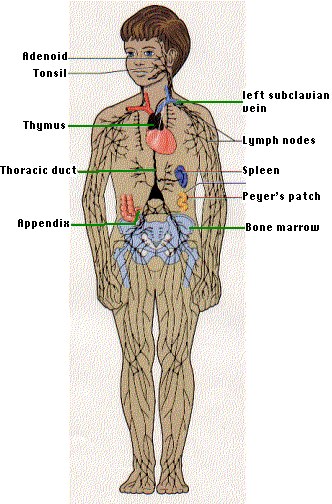
- The Lymphatic System
- Mechanoreceptors (touch, pressure, stretch, proprioception)
- Metabolism (with links to specific examples)
- Muscles: skeletal, cardiac, smooth
- Muscles: testing the sliding-filament hypothesis
- Neurons and other “excitable cells”
- Nervous System, central: the brain and spinal cord.
- Nervous System, peripheral
- Nitric Oxide (NO): its physiological functions
- Nutrition
- Olfaction: The Sense of Smell
- Pain
- Phenylketonuria (PKU)
- Pheromones
- Prenatal screening
- RDAs: Recommended dietary allowances
- Sexual Reproduction
- Sickle-cell disease
- Synapses
- Taste, sense of
- Urea cycle
- Vision, in humans; in arthropods
- Vision: processing visual information
Plant Biology
- Alternation of generations in plants
- Angiosperm life cycle
- Arabidopsis thaliana: a “model” organism
- Asexual reproduction in plants
- Plant cells
- Chlorophyll
- Chloroplasts
- Diversity and evolutionary relationships of the plants
- Etiolation
- Fern life cycle
- Flowering: its genetic control
- Gas exchange in plants
- Germination of seeds
- The Leaf
- Moss life cycle
- Plant Growth
- Plant Hormones. Abscisic acid (ABA), Auxin, Cytokinins, Ethylene, Gibberellins, Strigolactones
- Plant tissues
- Phloem and the transport of food
- Photoperiodism and phytochrome
- Photorespiration and C4 plants
- Photosynthesis: Pathway of Carbon Fixation: the Calvin cycle
- Photosynthesis: The Role of Light: the so-called light reactions
- Photosynthesis: energy relationships
- Photosynthesis: how its details were discovered
- Radiation: spectrum of electromagnetic
- Roots
- Self-incompatibility: how plants avoid inbreeding
- Stems
- Strigolactones
- Symbiotic nitrogen fixation
- Transgenic Plants
- Transpiration
- Tropisms
- Xylem and the transport of water and minerals
Viruses
- Influenza: the “flu”
- Mapping the genes of T2
- PhiX174
- Retroviruses: including HIV, the cause of AIDS
- rII locus of T4
- Smallpox
- Viruses
 Save as PDF